
EPA AHERA Clearance Standard: What Property Owners Must Know

The EPA AHERA Clearance Standard sets the maximum allowable airborne asbestos fiber concentration after abatement work. Property owners must hire certified professionals to test and document compliance. Failure to meet these standards can lead to serious health risks and legal consequences.
Asbestos is one of the most serious environmental hazards found in older buildings across the United States. Millions of homes and commercial properties built before the 1980s contain asbestos-containing materials (ACMs) in flooring, insulation, roofing, and more.
For property owners, understanding the EPA AHERA Clearance Standard is not just a legal obligation. It is a critical step in protecting the health of building occupants and preserving the long-term value of your property. Whether you are preparing for a renovation, responding to damage, or undergoing environmental remediation, knowing the rules around asbestos clearance can save you from costly mistakes.
This guide breaks down what AHERA is, how the clearance standard works, what your responsibilities are as a property owner, and the most common errors to avoid.
What Is AHERA and Why Does It Matter?
The Asbestos Hazard Emergency Response Act (AHERA) was signed into law in 1986 as part of the Toxic Substances Control Act. It was created in direct response to growing concerns about asbestos exposure in schools. According to the EPA, AHERA originally required local education agencies to inspect school buildings for asbestos-containing materials and take appropriate action to reduce or eliminate exposure.
Over time, AHERA's principles have expanded in relevance to commercial buildings and residential properties. Its core purpose remains the same: to ensure that asbestos is identified, managed, and removed safely.
Why does this matter for property owners? Asbestos exposure is directly linked to serious diseases, including mesothelioma, asbestosis, and lung cancer. According to the EPA, there is no safe level of asbestos exposure. Even short-term contact with airborne fibers can have long-term health consequences. Asbestos fibers are invisible to the naked eye, odorless, and can remain suspended in the air for hours after disturbance.
Beyond health, non-compliance with EPA standards can result in significant fines, project delays, and liability claims. For those dealing with fire and smoke damage cleanup or water damage cleanup, where building materials are frequently disturbed, this risk is especially relevant.
Understanding the EPA AHERA Clearance Standard
The AHERA Clearance Standard defines the acceptable level of airborne asbestos fibers that must be achieved after abatement before a building can be safely reoccupied.
Here is what you need to know about how it works:
Acceptable Asbestos Levels
Under EPA regulations, the post-abatement clearance level for asbestos is fewer than 70 asbestos fibers per square millimeter (s/mm²) as measured by Transmission Electron Microscopy (TEM). This is the most sensitive and accurate measurement method available and is required for final clearance under AHERA.
Measurement Protocols
Clearance air monitoring involves collecting air samples from the abatement area using specialized equipment. These samples are then analyzed in an accredited laboratory. The process must follow strict chain-of-custody procedures to ensure results are legally defensible.
Documentation and Certification Requirements
All clearance testing must be conducted by a certified industrial hygienist or licensed air monitoring specialist who is independent of the abatement contractor. Upon passing clearance, a formal certification document is issued. This record must be retained as part of the property's compliance history.
What Are Property Owners Responsible for Under AHERA?
Understanding your obligations before, during, and after asbestos abatement is essential. Here is a breakdown of your key responsibilities:
Identifying Potential Asbestos-Containing Materials
Any building constructed before 1980 should be treated as potentially containing asbestos until proven otherwise. Common locations include:
- Pipe and duct insulation
- Textured paints and ceiling tiles
- Vinyl floor tiles and adhesives
- Roofing shingles and felt
- Drywall and joint compounds
Hiring Certified Professionals
Only EPA-accredited inspectors and abatement contractors are legally authorized to assess, remove, or encapsulate asbestos. This applies to both large-scale projects and smaller repairs. Hiring an uncertified contractor not only puts occupants at risk but also creates serious legal exposure for the property owner.
Maintaining Compliance Records
Property owners must keep detailed records of all asbestos assessments, abatement work, clearance tests, and any ongoing management plans. These documents are often required during property sales, insurance claims, and permit applications. Environmental cleanup projects, in particular, generate significant documentation that must be organized and retained properly.
The Clearance Process: Step by Step
Understanding the full sequence of the clearance process helps property owners know what to expect and how to avoid unnecessary delays.
Step 1: Initial Inspection and Asbestos Identification
A certified inspector surveys the building to identify and sample suspected ACMs. Samples are sent to an accredited laboratory. If asbestos is confirmed, a management or abatement plan is developed.
Step 2: Professional Removal or Encapsulation
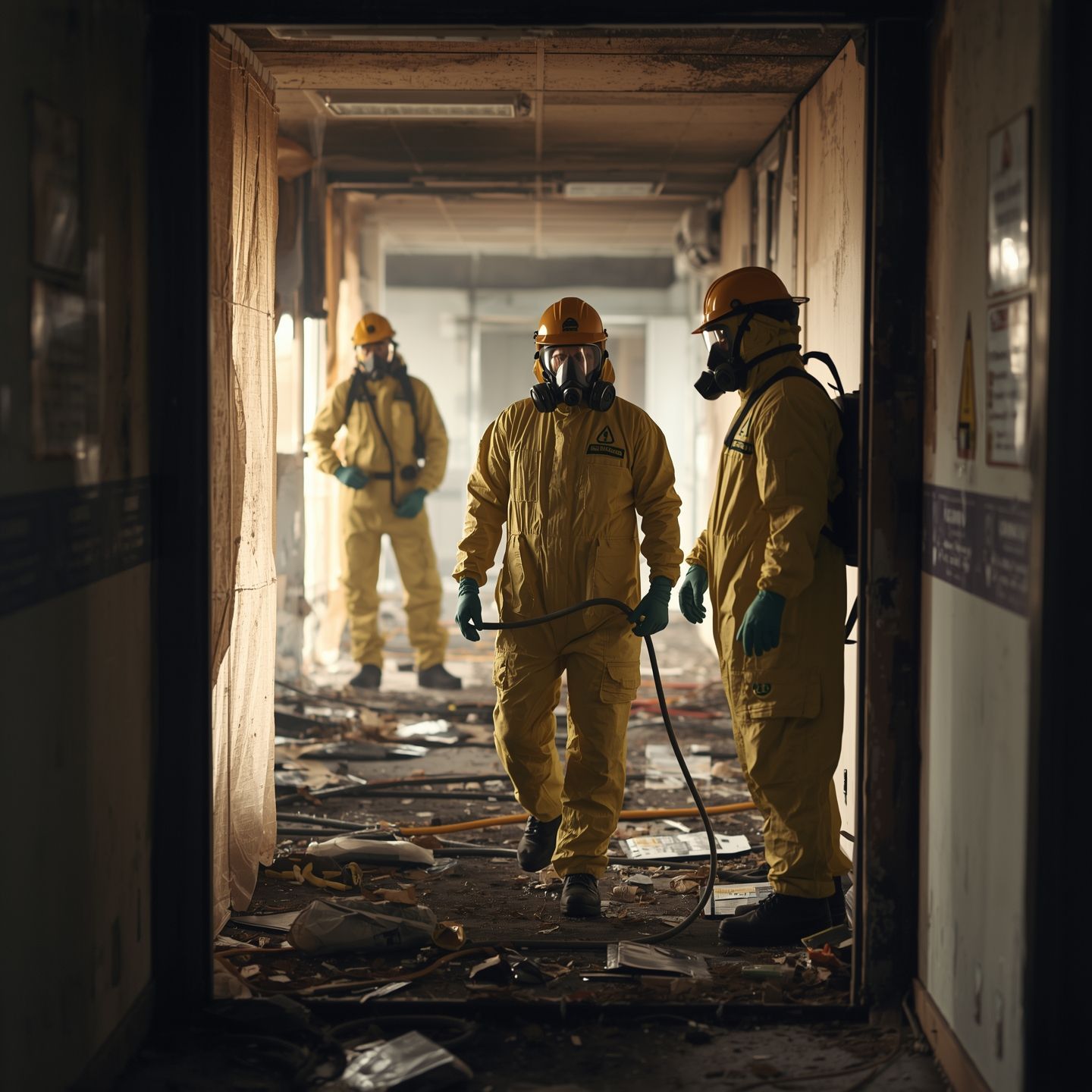
Depending on the condition of the materials, the licensed contractor will either remove the ACMs entirely or encapsulate them to prevent fiber release. The work area is sealed with negative air pressure equipment to contain any airborne fibers during property cleanup.
Step 3: Post-Remediation Clearance Testing
Once abatement is complete, all visible debris is removed, and the area undergoes a thorough wet-wipe cleaning. Air samples are then collected and submitted for TEM analysis. The space cannot be reoccupied until the results confirm compliance with the AHERA clearance standard.
Step 4: Final Documentation and Compliance Certification
Upon passing clearance, the project is officially closed out with written certification. This document should be filed with all other property records relating to environmental remediation and damage mitigation work.
Protecting Your Property Starts with the Right Knowledge
The EPA AHERA Clearance Standard exists for a clear reason: asbestos is dangerous, and removing it incorrectly can be just as harmful as leaving it untouched. For property owners, the path to compliance is straightforward when you work with the right professionals, maintain accurate records, and follow the established clearance process from start to finish.
The financial and health costs of cutting corners far outweigh the investment in proper abatement and environmental cleanup. A clean clearance certificate not only confirms that your building is safe to occupy, but it also protects your property's value and shields you from legal liability down the line.
If your property has been affected by asbestos, water damage, or fire and smoke damage cleanup needs, the team at Environmental 911 is ready to help.
Connect with certified professionals who can guide you through every step of the clearance and remediation process.